
Full Year 2025
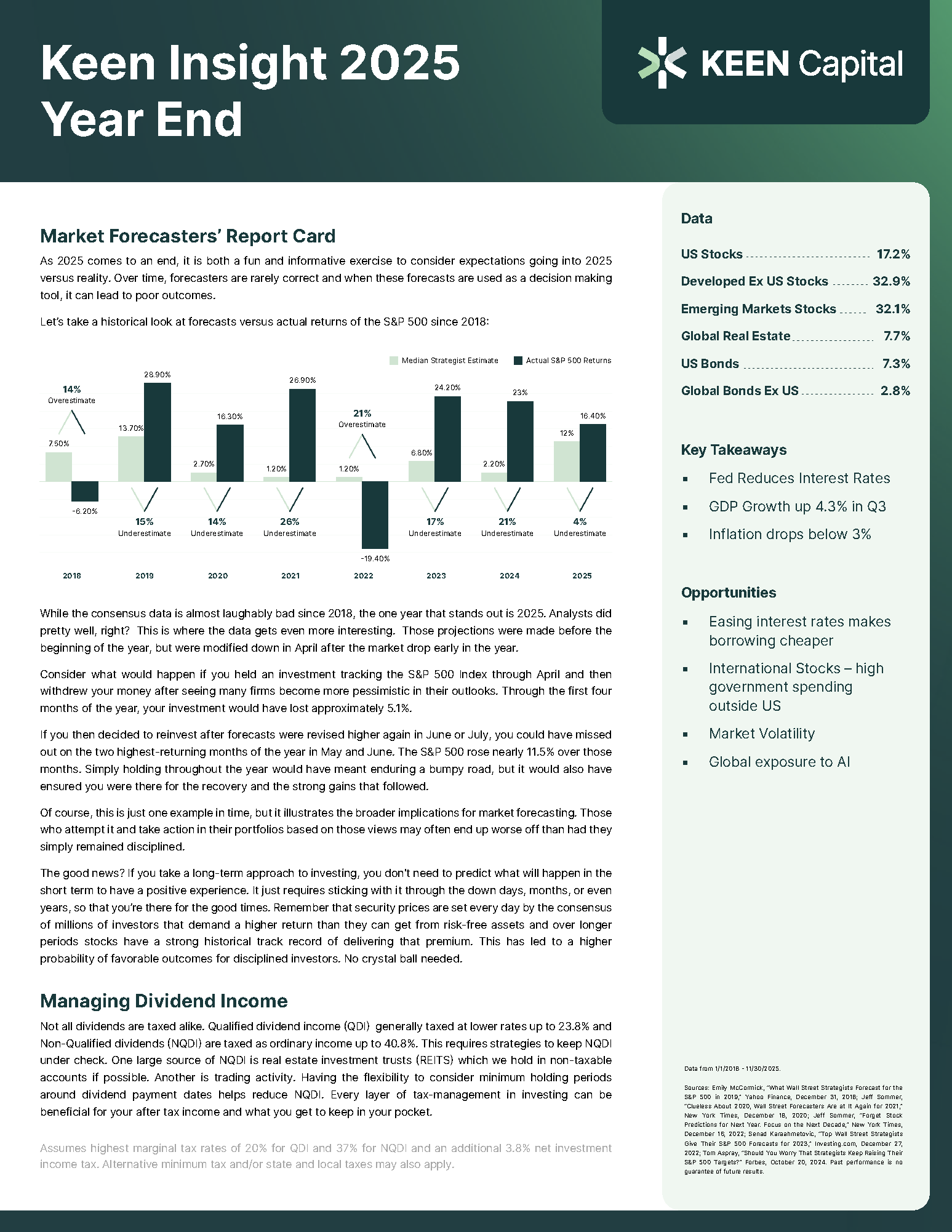
As 2025 comes to an end, it is both a fun and informative exercise to consider expectations going into 2025 versus reality.
Over time, forecasters are rarely correct, and when these forecasts are used as a decision-making tool, it can lead to poor outcomes.
In our final 2025 KEEN Insight, we take a historical look at market forecasts versus actual S&P 500 returns since 2018, and what that gap can teach us about long-term investing.
The Forecast Gap Since 2018
The data paints a consistent picture. Since 2018, consensus forecasts have missed the mark far more often than they’ve been right.
One year does stand out, though: 2025.
At first glance, it looks like analysts finally got it right. But a closer look tells a different story. Many of those forecasts were revised lower in April after early-year market declines, and then adjusted higher again later in the year.
Why Timing The Revisions Costs You
That timing matters. An investor who reacted to the more pessimistic outlooks in April by stepping out of the market would have experienced roughly a 5% loss through the first four months of the year. Waiting to re-enter after forecasts improved in June or July likely meant missing the market’s strongest stretch. The S&P 500 rose nearly 11.5% in May and June alone.
Simply staying invested meant enduring a bumpy start to the year, but it also meant being there for the recovery and the gains that followed.
That pattern shows up again and again in the data.
Discipline Matters More Than Prediction
In our final 2025 KEEN Insight, we break down how market forecasts have diverged from reality since 2018, what that means for real-world investors, and why discipline matters more than prediction.
As always, if you’d like to talk through your portfolio or where we see potential opportunities, we’re just a reply away.
Here’s to a successful 2026!
—The KEEN Capital Team